



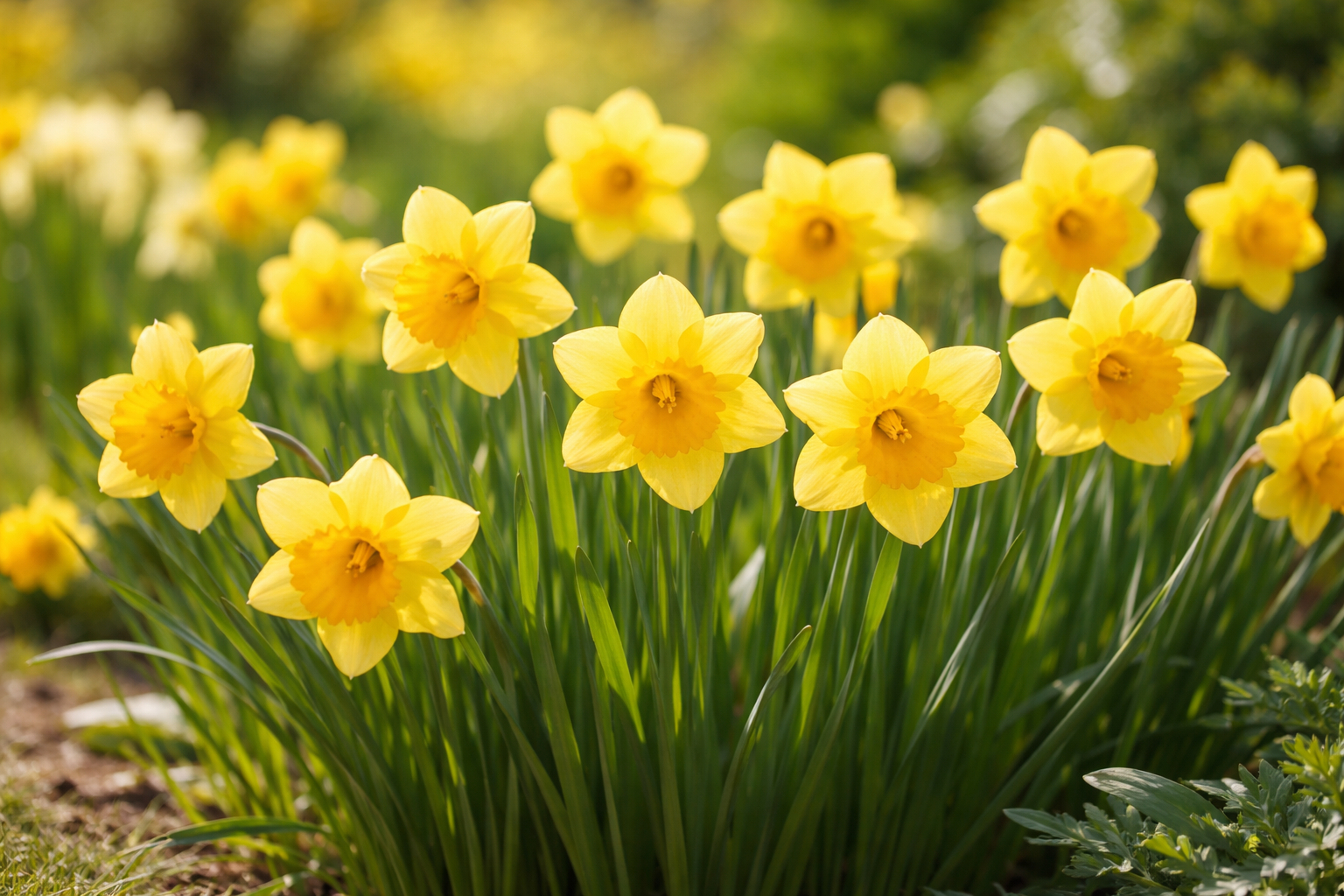
There are few sights in the garden quite as uplifting as a host of golden daffodils.
After months of muted winter tones, their bright, trumpet-shaped blooms arrive like a cheerful fanfare– bold, optimistic, and impossible to ignore.
Whether dotted along a garden border, dancing beneath trees, or naturalised in grassy drifts, narcissi are bright and beautiful. They provide dependable colour, year after year, with barely a demand in return.
Plant them once, and they’ll return year after year, multiplying quietly beneath the soil and bursting into bloom just when you need them most. For gardeners over 50 (and beyond), they are the very definition of low-maintenance joy.
Plant and forget
Narcissi are the ultimate “plant and forget” bulb. Pop them into the ground in autumn, and by mid-spring you’ll be greeted with nodding blooms in shades of sunshine yellow, soft cream, white and even apricot or pink.
As we have mentioned, they naturalise beautifully, meaning they gradually spread into generous clumps without any fuss. Many gardeners find that over the years, their daffodils form drifts that look as though nature itself arranged them. And unlike tulips, which can be short-lived, narcissi are in it for the long haul.
Vital statistics
Height: Typically 15cm-60cm (6-24 inches), depending on the variety. Taller trumpet types can reach 40-50cm, while dwarf forms stay closer to 15cm.
Spread: Approximately 10cm -30cm (4-12 inches). Clumps will slowly expand over time as bulbs multiply underground.
Position: Full sun to partial shade. They’ll tolerate light shade, especially under deciduous trees that leaf out later.
Soil: Well-drained soil is essential, as these bulbs dislike sitting in winter wet. Slightly acidic to neutral soils suit them best.
Flowering time: Early to late spring (March-May in most of Canada).
Hardiness: Typically Zones 3-8, making them ideal for most Canadian gardens.
Wildlife: Deer and rabbits tend to leave them alone.
Toxicity: All parts are toxic if ingested (so plant with care around pets)
Versatile
Narcissi are wonderfully versatile. Plant them in borders, beneath shrubs, in containers, or simply scatter them through a lawn for a naturalised look. Their upright, vase-like form and strap-shaped leaves create a neat, structured presence even after flowering.
For maximum impact, plant in drifts rather than neat rows. A cluster of 10 or more bulbs will always look more natural than a regimented line.
They also make excellent cut flowers. Just remember: their sap can shorten the life of other blooms, so condition them separately before mixing in arrangements.
Care tips
- Planting: Plant bulbs in autumn, about 10-15cm (4-6 inches) deep.
- After flowering: Deadhead spent blooms, but leave the foliage to die back naturally. This feeds next year’s flowers.
- Watering: Minimal once established; they cope well with average moisture.
- Dividing: Every few years, lift and divide overcrowded clumps for even better displays
Popular varieties
- ‘Dutch Master’ – Classic golden trumpet, tall and reliable
- ‘Tête-à-Tête’ – A charming dwarf variety, perfect for pots and edging
- ‘Minnow’ – Multi-flowering stems with a delicate, airy look
- ‘Carlton’ – Large, bold blooms ideal for cutting.
These varieties offer a mix of heights and flowering styles, allowing you to extend the season and add visual interest.
An old friend
Narcissi ask for so little and give so much in return—colour, optimism, and the quiet promise that winter really does end.
Plant them once, and every spring thereafter, they’ll feel like an old friend returning.