



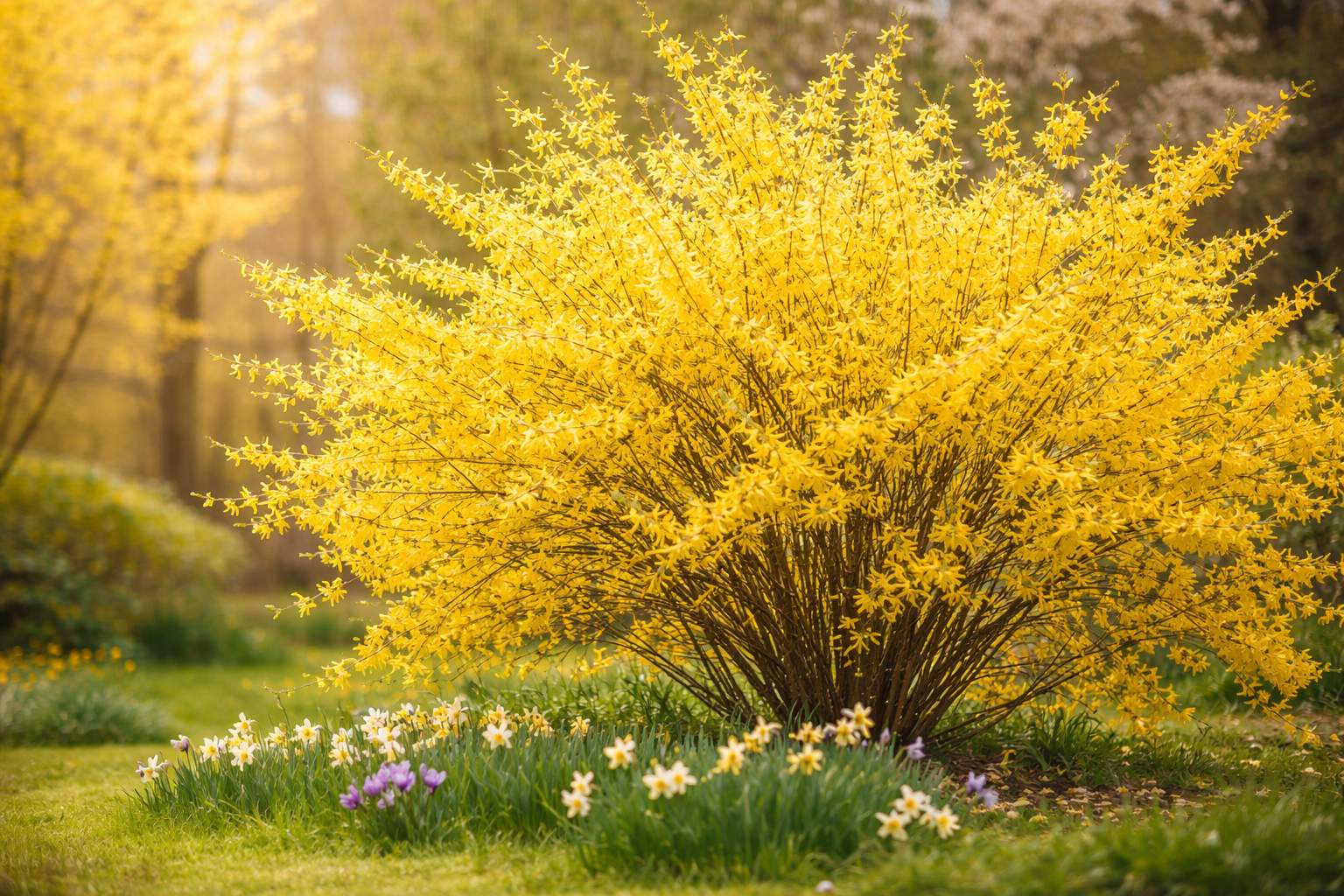
If there is one shrub that knows how to herald the start of the season, it is the forsythia, which is known as Golden Bells.
While the rest of the garden is still shaking off its winter slumber, these reliable golden bells are ringing in the changes. It’s a welcome sight for any gardener who has spent the last few months staring at mountains of snow, bare earth and grey skies.
For those of us dealing with a stubborn Canadian frost, the forsythia is a real bright spark, with much of its stems covered in a glorious yellow mantle.
Vital statistics
Height: Typically 1.8m-m (6–10 feet), though dwarf varieties may stay under 1.2m (4 feet). Its naturally arching habit gives it a relaxed, fountain-like shape in the garden.
Spread: Around 2m-3.5m (6-12 feet). It appreciates a bit of elbow room and can become gloriously sprawling if left unpruned.
Position: Full sun is best for maximum flowering, though it will tolerate partial shade (with fewer blooms).
Soil: Adaptable to most soils–loam, sandy, even slightly clay–provided it’s well-drained.
Flowering time: Early to mid-spring, often before the leaves appear–one of the earliest shrubs to bloom.
Hardiness: Exceptionally tough–generally hardy from Zone 3-8, making it ideal for Canadian gardens.
Flower colour: Bright, cheerful yellow (and plenty of it!)
Growth rate: Fast-growing and long-lived–great for impatient gardeners.
Dramatic
Forsythia’s party trick is simple but spectacular: masses of golden flowers borne along bare branches before the leaves even think about appearing. The effect is dramatic.
Those early blooms are more than just decorative, too. They provide an important early-season nectar source for bees and other pollinators just waking from winter.
Once flowering is over, the shrub settles into a dependable green backdrop for the rest of the season–never flashy, but always useful.
Growing tips
- Plant in sun for the best show: More sun equals more flowers; it’s as simple as that.
- Pruning: Always prune immediately after flowering. Cut too late, and you’ll remove next year’s buds
- Be bold: Older shrubs can be rejuvenated with hard pruning if they become leggy.
- Watering: Regular watering while establishing; drought-tolerant once mature.
Garden uses
Forsythia is wonderfully versatile and earns its keep in several ways:
- Spring focal point: – A blazing centrepiece when little else is in bloom
- Informal hedge: – Fast-growing and dense–ideal for screening
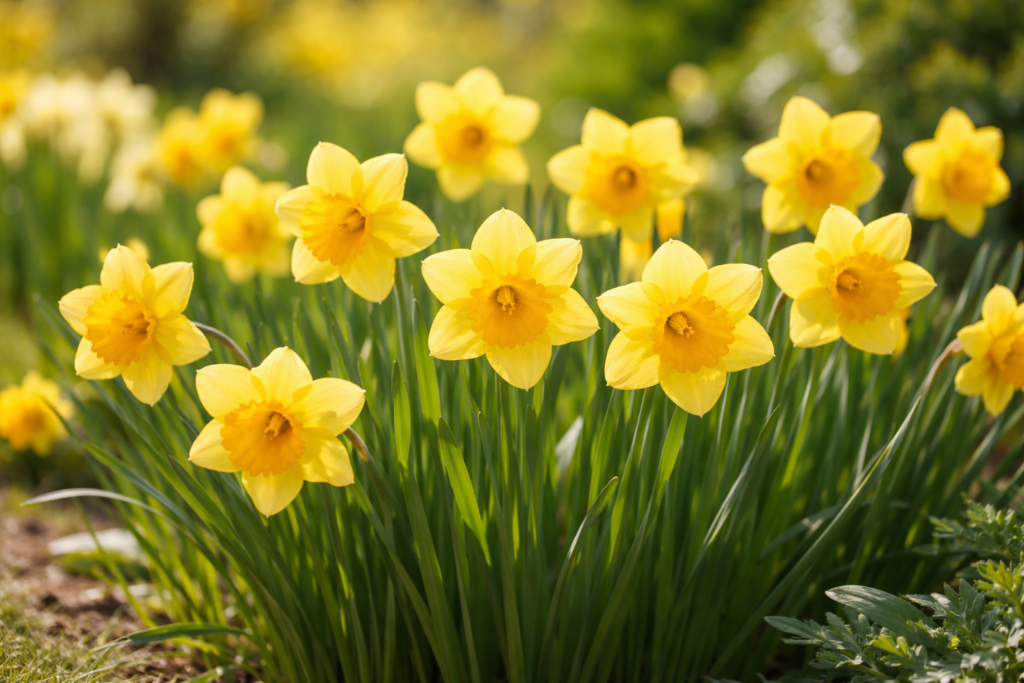
- Backdrop planting: – Perfect behind early bulbs like tulips and daffodils
- Slope stabiliser: – The weeping form, Forsythia suspensa, is excellent for erosion control.
Its natural shape is slightly wild and arching, so embrace it.
Varieties to consider
‘Arnold Giant’, ‘Beatrix Farrand’ and Weeping Forsythia, offer a range of sizes, bloom times, and growth habits for diverse garden needs. Other popular options are:
‘Lynwood Gold’: A classic, tall variety with abundant blooms
Northern Gold’: xtra hardy for colder climates
‘Gold Tide’ — A compact, ground-hugging option
Show Off®’ series — Modern varieties with improved flowering and tidier habits
In conclusion
Forsythia isn’t subtle–and that’s exactly its charm. It doesn’t whisper its arrival; it sings, loudly and brightly, at a time of year when we need it most.
Plant one, and every spring you’ll be greeted not just by flowers–but by a golden reminder that warmer days are finally on their way.