Recommended Posts



Search Results



For many of us over 50, travel isn’t just about seeing new places – it’s about staying connected to life. It’s visiting family, rediscovering independence, and proving that adventure doesn’t have an age limit.
But when mobility or health concerns enter the picture, holidays and travel can feel daunting. Wheelchairs, medications, fatigue, or chronic conditions can turn what used to be spontaneous into something that requires planning, patience, and a bit of courage.
The good news? Accessible travel has come a long way. Airlines, hotels, and tour operators are finally catching up to the reality that millions of older adults travel with mobility aids or health needs. The key is not to give up, but to plan smarter.

Before booking anything, take a clear look at your current health and stamina. How far can you comfortably walk? Do you need assistance with stairs or long distances? Are your medications time‑sensitive or temperature‑sensitive? These aren’t limitations, they’re logistics. Knowing your needs upfront helps you design a trip that works for you, not against you.
If you’re travelling with a partner or friend, talk openly about what kind of support you might need. It’s better to have those conversations early than to feel awkward later.

Not all cities are created equal when it comes to accessibility. Some, like Vancouver, Amsterdam, and Sydney, have excellent public transport and a lot of flat terrain. So, research before you boo. Also look for destinations that offer accessible hotels, reliable medical facilities, and senior‑friendly attractions.
Cruises and train journeys are often ideal for travellers with mobility or health considerations. You unpack once, everything’s close by, and medical staff are available if needed. Road trips can also work beautifully if you control the pace and plan frequent rest stops.
When booking, don’t rely solely on online listings. Call or email hotels directly to confirm accessibility features. Ask about:
– Step‑free entrances and elevators
– Walk‑in showers with grab bars
– Ground‑floor rooms or accessible suites
– Proximity to restaurants or pharmacies
If you use a wheelchair or walker, check door widths and bathroom layouts. A five‑minute phone call can save hours of frustration later.
Airports can be exhausting even for the healthiest traveller. Request wheelchair or mobility assistance when you book – it’s free and ensures priority boarding. Choose aisle seats for easier movement and avoid tight connections; two hours between flights is ideal.
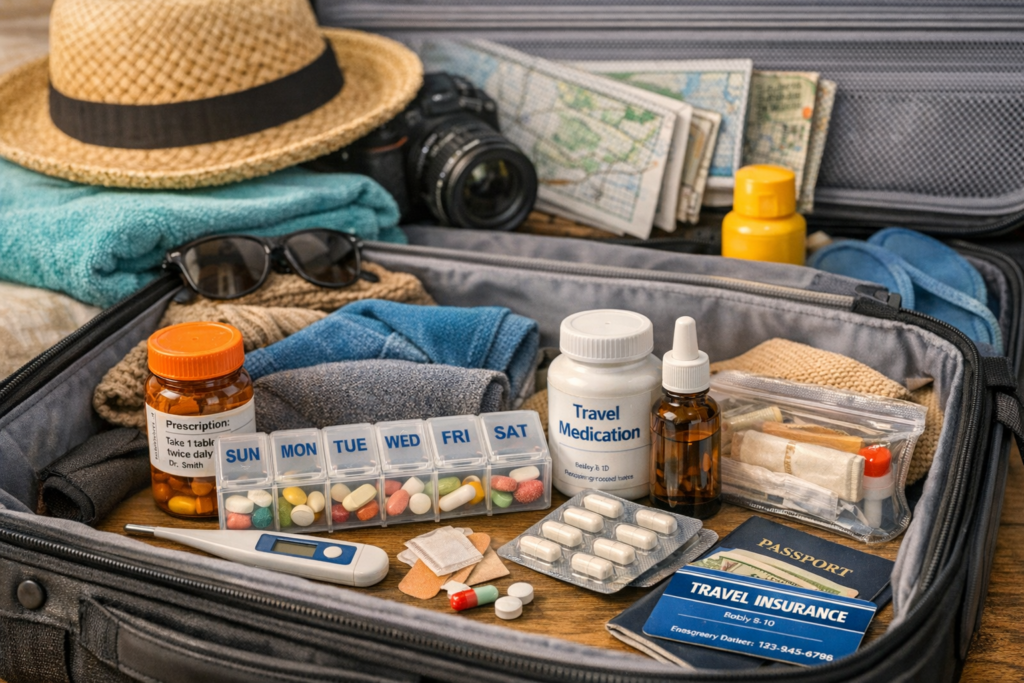
If you’re driving, rent an accessible vehicle or bring portable ramps for easy transfers. Keep mobility aids secured and medications within reach. For longer trips, pack a small “comfort kit” – snacks, water, pain relief, and a copy of your medical information. And don’t forget to take all your medication, with some spare in case you have to unexpectedly stay longer.
One of the biggest mistakes travellers make is trying to do too much. Build rest days into your itinerary. Use them for slow mornings, scenic train rides, or gentle walks. Listen to your body; fatigue can sneak up quickly when routines change.
If you’re managing a chronic condition, schedule medication times around local time zones before you leave. Apps like Medisafe or simple phone alarms can help you stay consistent.
If you have any health or mobility considerations, travel insurance isn’t optional; it’s your safety net. Search for policies that cover pre‑existing conditions, medical evacuation, and trip interruption due to illness. Many standard plans exclude these unless you declare them upfront, so transparency matters.
Ask specific questions before you buy:
– Does the policy cover mobility aids if they’re lost or damaged?
– Are you protected if you need to cancel due to a flare‑up or medical appointment?
– How does the insurer handle overseas hospital bills or prescriptions?
For frequent travellers, annual multi‑trip coverage can be more cost‑effective. And always carry a printed copy of your policy and emergency contact numbers, not just on your phone.
Many older travelers hesitate to ask for help, fearing it makes them look frail. In truth, accepting assistance is what makes independence possible. Airport staff, hotel concierges, and tour guides are trained to help, so let them.
If you’re travelling solo, consider joining small‑group tours designed for older adults or travellers with mobility needs. These trips often include accessible transport, slower pacing, and built‑in companionship.
There’s a quiet pride in travelling when it’s not easy. Every successful trip – whether it’s a weekend getaway or a transatlantic flight – is proof that life doesn’t stop when mobility changes. It just adapts.
Accessible travel isn’t about limitation; it’s about liberation. It’s about seeing the world on your own terms, with the wisdom to plan and the confidence to ask for what you need.
So pack your medication, your walking stick, and your sense of adventure.