By 2036, the number of Canadians aged over 55 is expected to hit around 17 million – close to half the projected population according to government data.
This ageing population will have significant implications for healthcare costs, social services, and quality of life across the country.
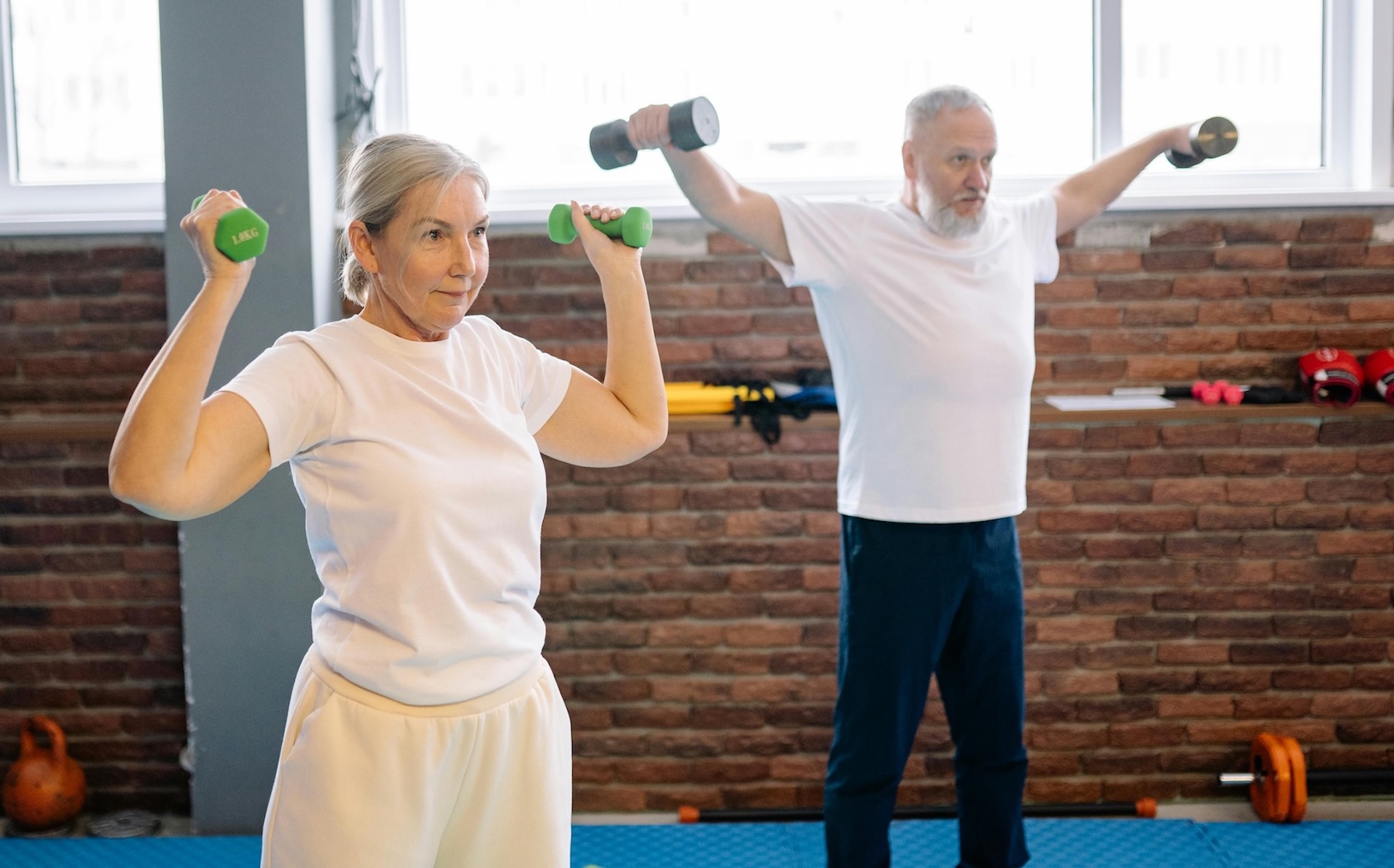
Once anyone reaches 50, over the years, they face declining muscle mass, reduced bone density, and increased cardiovascular risk. Exercise mitigates all three, yet adherence remains low.
Statistics Canada data from 2023 shows that just 28% of adults aged 60-79 meet minimum activity guidelines of 150 minutes of moderate exercise each week. This isn’t explained by physical limitations. Studies tracking older adults have found that most people who don’t exercise cite lack of motivation or interest rather than age, injury or disability.
High gym dropout rates
A 2022 McMaster University study followed 500 participants aged 55-75 through various exercise programmes. Dropout rates were highest in traditional gym settings and lowest in activities with built-in social components or those connected to existing hobbies.
David Marchand spent his first year of retirement watching a lot of television. Soon, his wife Karen had had enough. “She told me I was turning into furniture,” the 67-year-old, from Kelowna, says. “That stung, but she wasn’t wrong.”
David’s doctor had been advising him to bring down his weight and blood pressure for years. The nagging hadn’t worked. What did work was running into an old colleague at the grocery store who mentioned a hiking group that met Saturday mornings.
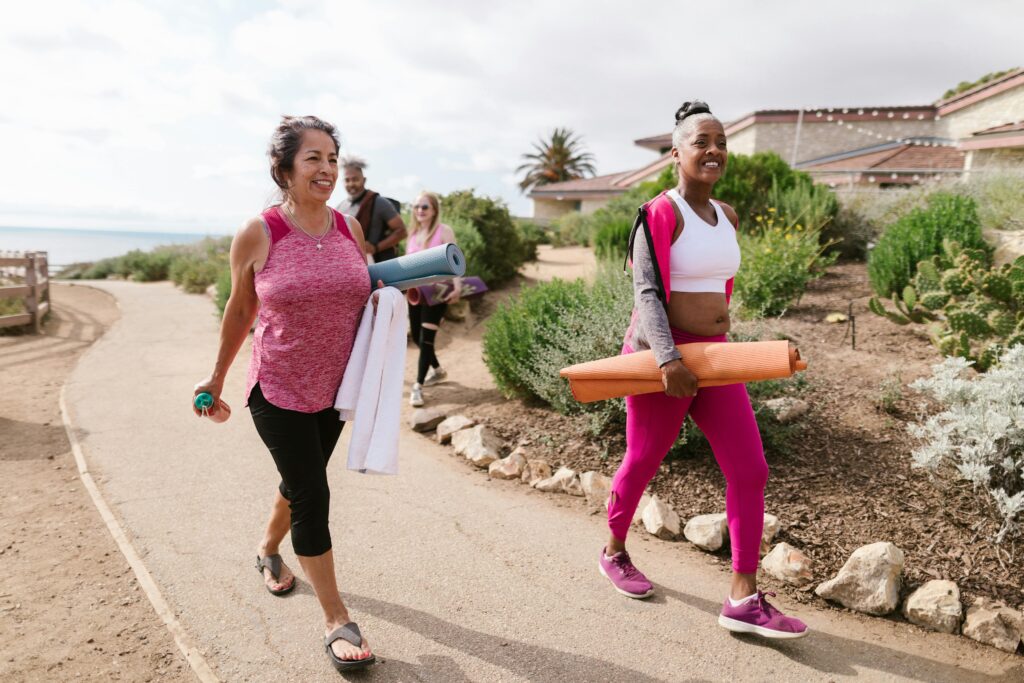
“I went once to be polite,” David says. “It turned out that half the group were people I used to work with. Now I go every week, and we grab breakfast after – athough, it’s more avacado on toast than full Canadian!”
As a result, his blood pressure is down and so is his weight. But he credits this not only to the exercise, but the benefit of the social aspect, too.
Basic health guidelines
Public health messaging around aging is straightforward: exercise regularly, stay mentally active, maintain social connections. All important. Yet only about 30% of Canadians over 60 meet basic activity guidelines, according to the Public Health Agency of Canada.
The gap between knowing and doing is the main issue. Patricia Chen, 61, of Edmonton, tried joining a gym four different times over the past decade. “I’d pay for three months, go twice, feel guilty about wasting money, and eventually cancel,” she says.
Last year, she changed tack and started doing something healthy that she enjoyed – taking ballroom dancing lessons with her sister. They go twice a week and haven’t missed a session in eight months. “Nobody told me exercise could be fun!” Patricia says.
This disconnect shows up repeatedly in conversations with older Canadians who seek ways of trying to stay active. The ones who stick with something rarely describe it as “exercise” or “staying healthy.” They talk about activities they enjoy that also have big exercise and health benefits.
Tom Bradshaw, 72, from Barrie, walks his neighbour’s dog three times a week. Susan Martinez, 58, of Halifax, signed up for a pottery class and finds herself on her feet for two hours at a time.
Cognitive wellbeing
The “use it or lose it” advice around cognitive health means different things for different people.
The Canadian Longitudinal Study on Aging, tracking 50,000 participants since 2010, has produced compelling data on cognitive health. Adults who regularly engaged in cognitively demanding activities – whether through work, education, or complex hobbies –showed 30-40% lower rates of cognitive impairment compared to those with minimal mental stimulation.
A 2021 McGill University study examined different types of mental activity in adults over 60. Learning new skills produced stronger cognitive benefits than activities that relied on existing knowledge. This held true whether the new skill was a language, musical instrument, or technical ability like computer programming.
Formal education and informal learning
For some, formal education is the answer. Continuing studies programmes at Canadian universities have seen steady enrollment growth among older students. Others prefer less structured approaches. James Liu, 69, of Whistler, started learning piano at 65 after his wife bought him a keyboard for Christmas. “I’m terrible at it,” he admits cheerfully. “But I practice every day, and I can play three songs now without looking at my hands.” His motivation isn’t becoming a concert pianist. He read that learning new skills helps prevent cognitive decline. Piano seemed less intimidating than going back to university.
Anne Dubois took a different path. After retiring from teaching, the 63-year-old from Montreal started volunteering as a literacy tutor. “I’m still teaching, just without the bureaucracy,” she explains. “Every student is different, so I’m constantly problem-solving.”
Social connection
Making friends as an adult can be awkward and ageing brings further problems. Robert Hayes, of Winnipeg, experienced this after his wife passed away three years ago. At 71, most of his social life had revolved around a few close friends. But after her death, invitations dried up. “People don’t know what to say, so they say nothing,” Robert says. “I don’t blame them, but it left me pretty isolated.” He eventually joined a men’s group that meets weekly at a local community centre. The first meeting was excruciating. “I almost left twice,” he admits. “But I’d driven 20 minutes to get there, so I stayed.” Six months in, he’s become friends with three other members. They meet for coffee between official meetings. It’s not the same as having his wife, Robert says, but it’s a good start. Getting older means dealing with loss – friends who move away, spouses who die, colleagues who drift off after retirement. Replacing those connections requires effort that feels unnatural to many people.
Margaret Foster, 68, of Gander, describes her social life as “deliberately constructed” now in ways it never was before. She attends a book club, volunteers at the hospital, and makes a point of accepting invitations even when she’d rather stay home. “Left to my own devices, I’d become isolated,” she says. “So I don’t leave it to my own devices.”
What matters most
Ask people who seem to be ageing well what their secret is, and most will shrug. They don’t think of themselves as doing anything special. But many of them combine physical activity with social engagement, or mental challenges with regular social contact. The activities reinforce each other. They also tend to have started with whatever felt easiest, then built from there. Nobody interviewed for this piece overhauled their entire life at once. They added one thing, got comfortable with it, then added something else.
The other important factor is that many of them had a push; a health scare, a concerned family member, a moment of realising they weren’t happy with how things were going.
Rarely does someone wake up one day and decide to completely change their routine without some catalyst. For David Marchand that catalyst was his wife’s blunt assessment. For Robert Hayes, it was months of loneliness after his wife’s death. For Patricia Chen, the dancer, it was her daughter asking if she was depressed. “I wasn’t depressed,” Chen says. “I was just… bored with the gym. It turns out those can look similar from the outside.”
Overcoming loneliness
Loneliness among older adults has moved from a quality-of-life concern to a recognized health risk with measurable outcomes. Data from the Canadian Longitudinal Study on Aging shows that socially isolated seniors have mortality rates 26% higher than their socially connected peers, controlling for other health factors. The mechanisms appear both psychological and physiological. Chronic loneliness correlates with increased inflammation markers, elevated cortisol levels, and poorer immune function. A 2023 study from the University of British Columbia found that socially isolated adults over 65 showed faster cognitive decline over five-year follow-ups compared to those with regular social contact.
This challenge also intensifies with age. Retirement eliminates workplace relationships. Geographic mobility separates families. Health issues reduce mobility. These factors compound, particularly for those over 75. Community-level interventions show mixed results. Programs exist across Canada – senior centres, volunteer organisations, recreational activities–yet participation rates remain below 40% of the target population. Research suggests structural barriers matter less than psychological ones. A 2022 survey of older Canadians found that 60% of lonely seniors were aware of available programmes but cited discomfort or anxiety about attending.
Technology offers partial solutions. Video calling and social media help maintain existing relationships, though studies show these don’t fully substitute for in-person interaction. Virtual communities can reduce isolation for homebound seniors but appear less effective at building new connections.
Preventative approaches
Provincial health authorities have begun shifting resources toward preventive approaches. British Columbia launched a provincewide active ageing strategy in 2023. Ontario expanded funding for community-based seniors programs by 40% over two years. Whether these initiatives translate into measurable health outcomes remains to be seen. The economic argument for prevention grows stronger as the population ages. Healthcare costs for inactive, socially isolated seniors significantly exceed those for healthier counterparts. A 2023 analysis by the Canadian Institute for Health Information estimated that increasing physical activity rates among seniors by just 15% would reduce healthcare expenditures by $2.1 billion annually.
Getting there requires moving beyond awareness campaigns to systemic changes in how healthcare addresses aging, how communities support older residents, and how society views the later decades of life