Recommended Posts
Search Results


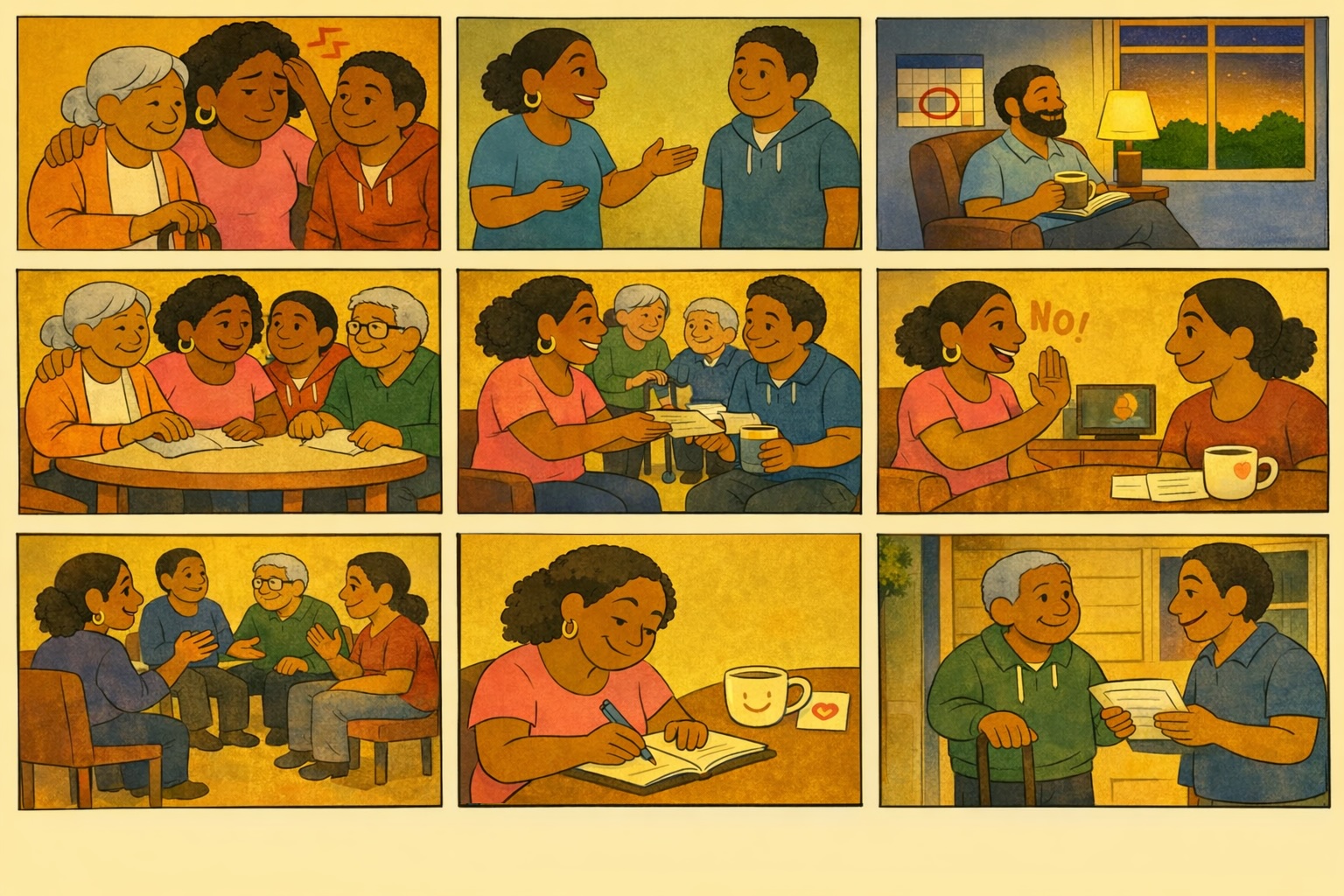
Marianne, from Kingston, Ontario, writes: “I’m in my late 50s and find myself caring for two generations at once. My parents are slowing down, getting frailer and need more help with everyday things, while my adult children still lean on me emotionally and sometimes financially. I feel stretched thin – guilty when I’m not doing enough, resentful when I’m doing too much, and unsure how to balance everyone’s needs without losing myself. How do people cope with this? What actually helps when you’re the one holding everything together?”
When my mum’s mobility declined at the same time my son moved home after a breakup, I felt like a human tug‑of‑war rope. What helped was accepting that I didn’t have to be the solution to every problem. I started asking, “What exactly do you need from me today?” instead of guessing. It turns out that most days they needed far less than I assumed.
I tried to be the hero for far too long. Then my doctor gently said, “You’re not responsible for everyone’s happiness.” That sentence changed everything. Now I schedule one evening a week that’s just for me – no errands, no phone calls, no guilt. Protecting that time has made me a calmer, kinder caregiver.
My parents didn’t want to burden me, and my kids didn’t want to admit they still needed me. Everyone tiptoed around each other. A family meeting – awkward though it was – opened the door to honesty. We made a shared plan: who helps with what, what’s realistic, and what’s not. Clarity reduced 80% of the stress.
I learned to treat caregiving like a relay race, not a solo marathon. My siblings and I rotate tasks: one handles appointments, one manages finances, one checks in daily. For my adult daughter, I shifted from “fixing” to “listening.” She didn’t need solutions – she needed a steady voice. That shift saved our relationship.
I used to feel guilty saying no. Then I realised boundaries aren’t rejection – they’re respect. I tell my grown kids, “I’m here for you, but I can’t drop everything today.” And with my dad, I’ve learned to ask what he wants. Sometimes, it is company more than actual help.
A support group for caregivers changed my life. Hearing other people say, “Yes, me too,” lifted a weight I didn’t know I was carrying. We share tips, frustrations, and small victories. It’s the one place I don’t have to be strong.
I started keeping a simple weekly log – not of tasks, but of moments that felt good. A laugh with my mum. A real conversation with my son. A quiet cup of coffee alone. It reminded me that even in the chaos, there were still moments of joy worth noticing.
The biggest lesson? Ask for help before you’re desperate. Friends, neighbours, community programmes – people want to support you, but they can’t if they don’t know what you need. Letting others in doesn’t make you weak. It makes the whole load lighter.

Advice18/03/2026

Health12/03/2026

Finance11/03/2026

Gardening10/03/2026

Pets06/03/2026

Pets05/03/2026