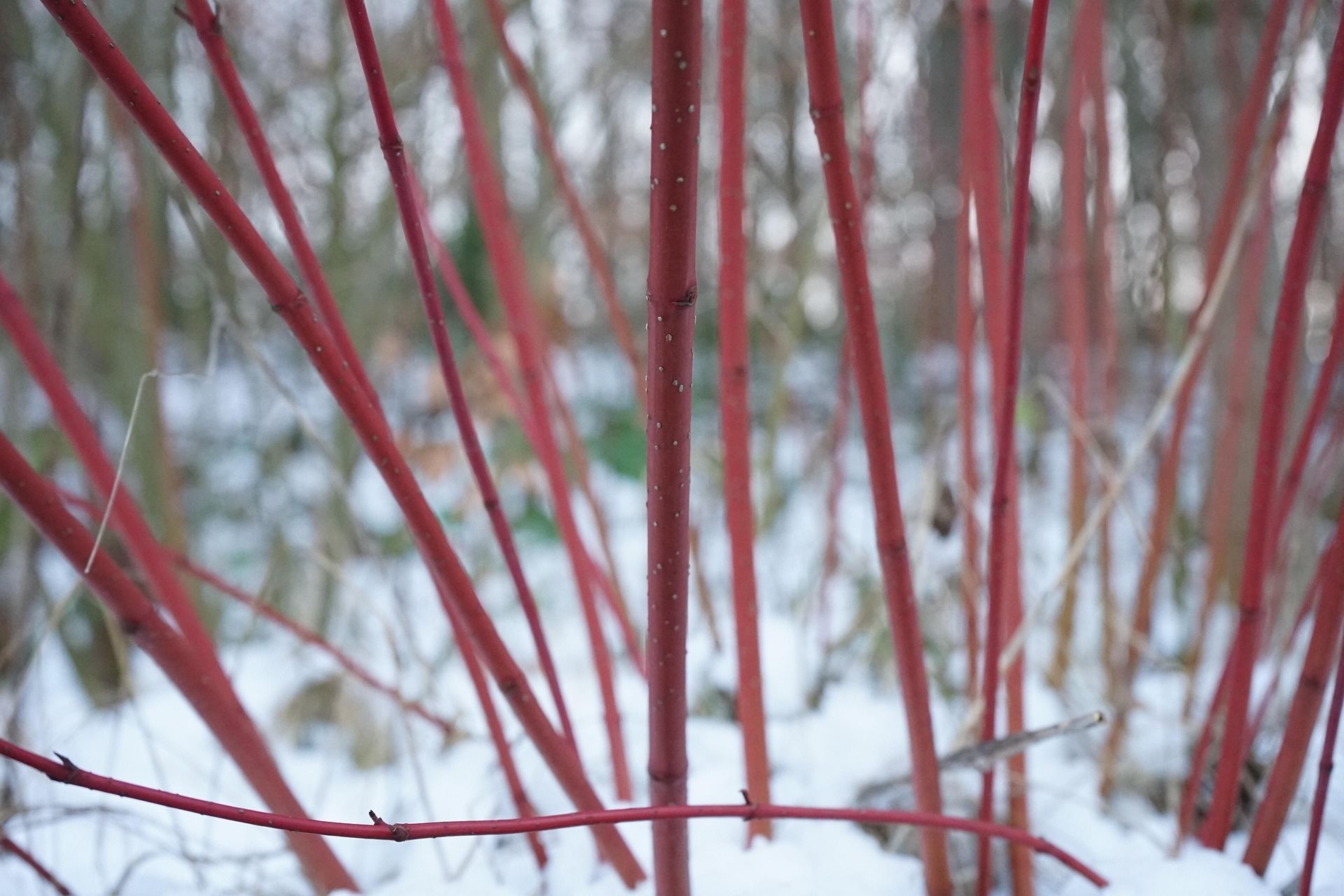
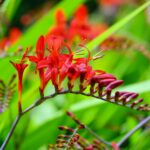
If the Canadian winter has your garden feeling a little ruff, the red osier dogwood is a striking plant that barks back! Known by the evocative common name red-twig dogwood or red willow, Cornus sericea is a stand-out in winter thanks to its bright red stems. In summer, it transforms from a pleasant green shrub to a spectacular beacon of crimson and coral once the leaves have dropped. This dogwood is a guaranteed high-impact showstopper, proving that you can enjoy garden colour in the season of snowy or gloomy winter.
Native across much of North America, this hardy deciduous shrub is perfectly adapted to cold Canadian winters. It thrives in moist soils and can tolerate everything from full sun to partial shade, making it highly versatile. While its white spring flowers and clusters of white-to-blue fruit are attractive, its real moment to shine comes when the temperatures drop and the young stems glow with incredible shades of brilliant, fire-engine red.
It’s an easy-care plant that’s surprisingly tough and requires little fuss. It’s loyal, like a good dog. Its reliable, year-round presence and low maintenance needs make it a true garden essential that deserves to be a top dog in your winter plantings.
Height: 1.5–3m (5-10 feet) tall
Spread: 1.5–3m (5-10 feet) wide. Forms dense, spreading thickets.
Flowers: It features clusters of small, white flowers in late spring, followed by white-to-pale-blue fruit. But it is primarily grown for its brightly coloured young stems, which are at their most vibrant from late autumn through early spring–a deep, ruby-red coat for the winter.
Hardiness: Hardiness: Full sun to partial shade. Prefers moist, well-drained soil, but is highly adaptable. Hardy in Zones 2-7.
Planting & care
Plant in spring or fall. Red Osier Dogwood tolerates wet feet well and is an excellent choice for poorly drained areas, as it loves to play in the puddles! The brightest stem colour comes from new growth, so the most crucial maintenance is a periodic rejuvenation prune. Annually, or every two to three years, cut one-third of the oldest, thickest canes down to the ground in early spring (before new growth begins). Think of it as clipping its nails to encourage fresh, vibrant, red-hot growth.
Seasonal tips
Winter is the peak season for red-twig dogwood. The striking contrast of its intense red stems against white snow or dark evergreens is stunning.
In summer, the dark green foliage provides a dense backdrop, and the shrub may also produce a second, less prominent flush of flowers.
Design ideas
Use the red osier dogwood where its winter colour will be visible: near a window, along a walkway or fence, or flanking an entrance. It is ideal for mass plantings in naturalized areas, wet gardens, or privacy screens. For maximum visual impact, pair the red stems with the deep, cool greens of pines (Pinus) or the white bark of birch (Betula). The osier dogwood’s glowing red stems look fantastic when reflected in still water, giving you a double dose of colour.
Final word
The red-twig dogwood is the ultimate loyal companion for your garden. It’s tough, native, beloved by birds, and provides essential, fiery red colour when the rest of the garden is asleep. For year-round structure and a guaranteed spectacular, playful show from December to March, this dogwood is the unparalleled top dog of the cold season.